


Notifier N16 Inspire Series Fire Alarm Panel
Notifier NFS-320
Notifier NFS2-640
Notifier NFS2-3030
Notifier CLSS Gateway
Notifier FirstVision
Kidde Aegis 2.0 Release Panel
Potter PFC 4410
Notifier RP-2002
Notifier SFP-10UD
Kidde ARIES
Kidde ARIES NETLink
Aegis XLT Micro 1-EV Kit
Conventional Fire Alarm Control Panels
Addressable Fire Alarm Control Panels














Fire Alarm
Control Panels (FACP)
Control Panels (FACP)
Notifier NFS-320
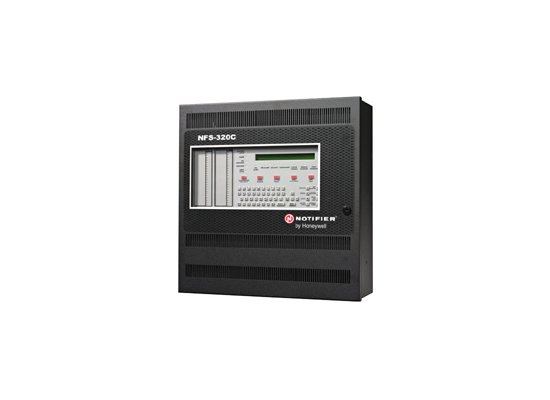
The Notifier NFS-320 is a single-loop intelligent addressable fire alarm control panel from the ONYX Series. One isolated intelligent Digital Communications Loop supports up to 159 detectors and 159 modules = 318 addressable devices in total = with four on-board Notification Appliance Circuits, an 80-character display and QWERTY keypad, and releasing functions for up to ten independent hazards. The NFS-320C is the ULC-listed model specified for Canadian installations, listed under file S635.
Notifier has confirmed the phase-out of the NFS-320. Orders for the NFS-320C will be accepted until 15 November 2027, with delivery no later than 20 December 2027, and from 30 September 2026 every new order requires pre-approval by Notifier. The replacement is the NOTIFIER INSPIRE N16 platform — the N16e for the NFS-320, the N16e-r where a red enclosure is required. Existing NFS-320 systems can continue to be used and maintained: support continues under the applicable product warranty, and beyond it through the availability of replacement boards, subject to component availability. Control Fire Systems is an authorized Notifier Engineered Systems Distributor (ESD) in Toronto and supports NFS-320 panels across Canada with service, parts, programming and planned migration.
NFS-320 specifications at a glance
All figures below are taken from Notifier datasheet DN-60085:S (NFS-320C), 30 July 2022.
| Specification | Value |
|---|---|
| Panel type | Intelligent addressable fire alarm control panel, ONYX Series. NFS-320C is the ULC-listed model for Canada |
| Detection loop | One isolated intelligent Digital Communications Loop (DCL), Class A, B or X |
| Device capacity | 159 detectors + 159 modules = 318 addressable devices |
| Detector types | Any mix of photoelectric, thermal, multi-criteria or CO devices; wireless devices available through the SWIFT gateway |
| Notification Appliance Circuits | Four on-board, Class A/B, 1.5 A each, with selectable System Sensor, S or Gentex strobe synchronization |
| Display | Standard 80-character LCD (2 × 40) with full QWERTY keypad (KDM-R2) |
| Software zones | 99 programmable zones plus 14 special programming zones |
| Releasing | Ten independent hazards, cross-zone (three options), adjustable delay and discharge timers, abort (four options), low-pressure CO₂ listed |
| Networking | High-speed network up to 200 nodes; standard network up to 103 nodes; up to 54 nodes where DVC-EM is used in network paging. One network communications module per node |
| Wireless | SWIFT smart wireless through the FWSGA gateway — up to 49 SWIFT devices per gateway, up to four gateways with overlapping coverage |
| Cloud connectivity | CLSS (Connected Life Safety Services) through the CLSS Gateway — remote monitoring and reporting without replacing the panel |
| Annunciators | Up to 32 remote 80-character annunciators per panel; ACS annunciators 32 addresses × 64 points |
| Event history | 800-event history file in non-volatile memory plus a separate 200-event alarm-only file |
| Protocol | FlashScan — polls 318 devices in under two seconds, activates up to 159 outputs in under five seconds |
| Agency listings | ULC listed file S635; FM approved; CSFM 7165-0028:0243; Fire Dept. of New York COA #6212 |
| Seismic | Certified for seismic applications with the SEISKIT-320/B26 mounting kit |
| Marine | Approved for marine applications when configured with the CAB-BM marine system and listed compatible equipment |
| Lifecycle status | Phase-out confirmed. Last order date 15 November 2027 (NFS-320C), delivery by 20 December 2027; pre-approval required for orders placed from 30 September 2026. Replacement platform: NOTIFIER INSPIRE N16e. |
NFS-320 model variants
Unless a version-specific suffix appears at the end of the part number, “NFS-320" refers to the whole family. For Canadian installations, specify the NFS-320C and refer to Canadian applications manual addendum 52747.
Models specified in Canada
| Part number | Description |
|---|---|
| NFS-320C | Standard factory-assembled ULC system: one control panel mounted on chassis (120 V) with grounding cable, battery interconnect cables and document kit; one integral power supply mounted to the control panel; one primary display KDM-R2; one cabinet for surface or semi-flush mounting. Batteries purchased separately |
| NFS-320C-FR | As NFS-320C, French language |
| NFS-320CR | As NFS-320C, red enclosure |
| NFS-320SYS | For applications requiring CAB-4 or CAB-5 series backboxes — see DN-60637 |
| TR-320 | Trim ring for the NFS-320C cabinet. Mount the backbox at least 1 in (2.54 cm) between wall surface and front of backbox so the door opens fully past the trim ring |
| NFS-320-RB / NFS-320-RBC-FR | Replacement board with central processing unit, standard and Canadian French. The keypad must be removed before shipping the old unit out for repair |
One or two option boards may be mounted inside the cabinet — to the left of the display and one inside; additional option boards go in remote cabinets. All mounting holes must be secured with a screw or standoff to maintain earth ground continuity, and power-limited wiring must be separated from non-power-limited wiring as described in the installation manual.
Power, battery and cabinet data
| Specification | Value |
|---|---|
| Primary input power | 120 VAC, 50/60 Hz, 5.0 A |
| Total 24 V output | 6.0 A in alarm, shared by all internal circuits |
| Current draw (standby / alarm) | NFS-320C board 0.250 A, plus 0.035 A for each NAC in use; KDM-R2 with backlight on 0.100 A |
| Notification circuits | Four at 1.5 A each |
| Resettable regulated 24 V power | 1.25 A |
| Non-resettable regulated 24 V power | Two outputs — one at 1.25 A and one at 0.50 A |
| Non-resettable 5 V power | 0.15 A |
| Battery charger range | 18 AH – 200 AH; float rate 27.6 V. Batteries over 26 AH require a separate cabinet (NFS-LBB, or NFS-LBBR in red) |
| Batteries | Two 12 V, 18–200 AH (BAT Series) |
| Auxiliary power supplies | ACPS-610 addressable charging power supply, 6.0 A or 10.0 A. FCPS-24S6C and FCPS-24S8C remote 6 A and 8 A supplies — for use only as a NAC expander |
| Cabinet, backbox | 18.12 in (46.025 cm) wide × 18.12 in (46.025 cm) high × 5.81 in (14.76 cm) deep |
| Cabinet, door | 18.187 in (46.195 cm) wide × 18.40 in (46.736 cm) high × 0.75 in (1.905 cm) deep |
| Shipping weight | 37 lb (16.78 kg) without batteries |
| Operating range | 0–49 °C (32–120 °F), 93% ± 2% RH non-condensing at 32 °C ± 2 °C |
| Recommended environment | 15–27 °C (60–80 °F) — extremes shorten battery and electronics life |
ONYX Intelligent Sensing and detector sensitivity
ONYX Intelligent Sensing is a set of algorithms that runs on every reading from every detector. Drift compensation and smoothing let a detector retain its ability to detect real smoke as dust accumulates, resist false alarms, and perform the periodic sensitivity measurements NFPA 72 requires. Cooperating multi-detector sensing lets a sensor take readings from nearby sensors into account when making an alarm or pre-alarm decision, raising its sensitivity to real smoke by a factor of almost two to one without statistical sacrifice in its ability to resist false alarms.
Nine alarm sensitivity levels and nine pre-alarm levels are available, set manually or switched automatically between day and night. Maintenance warnings are reported at three levels: low chamber value (usually a hardware fault), maintenance alert (dust near the allowed limit) and maintenance urgent (dust above the limit). In self-optimizing pre-alarm mode, a detector learns its normal environment over time, measures the peak readings over a long period, and sets the pre-alarm threshold just above those normal peaks.
Should the panel's microprocessor fail, FlashScan detectors revert to degraded operation and can still activate the panel's NAC circuits and alarm relay. Each of the four built-in circuits has its own Disable/Enable switch for this feature.
Sensitivity windows
| Detector technology | Sensitivity window (%/foot obscuration) |
|---|---|
| Photoelectric | 0.5 – 2.35 |
| High-sensitivity photoelectric (VIEW), open area protection | 0.5 – 2.0 |
| High-sensitivity photoelectric (VIEW), special applications | 0.02 – 0.5 |
| Multi-criteria detector, open air protection | 2.52 – 3.89 |
| Multi-criteria detector, special applications | 1.13 – 2.52 |
Compatible intelligent devices
These are the intelligent devices listed as compatible with the NFS-320C in datasheet DN-60085:S. All are supplied and serviced by Control Fire Systems. Suffix -WH denotes white, -IV ivory.
Detectors and sensors
| Part number | Description |
|---|---|
| FSP-951A / FSP-951A-IV | Low-profile intelligent photoelectric sensor. The white -951A is FlashScan only |
| FSP-951TA / FSP-951TAT-IV | Photoelectric sensor with built-in 135 °F (57 °C) fixed-temperature thermal device |
| FSP-951RA / FSP-951RA-IV | Low-profile photoelectric sensor, remote test capable. For use with the DNRA duct housing |
| FST-951 / FST-951-IV / FST-951A-IV | Low-profile intelligent 135 °F (57 °C) fixed thermal sensor. Must be mounted to one of the listed bases |
| FST-951R(A) / FST-951R-IV / FST-951RA-IV | Low-profile intelligent rate-of-rise fixed thermal sensor |
| FST-951H(A) / FST-951H-IV / FST-951HA-IV | Low-profile intelligent 190 °F (88 °C) thermal sensor |
| FSV-951 / -IV / FSV-951A-IV / FSV-951R / -IV / FSV-951RA-IV | VIEW intelligent high-sensitivity photoelectric smoke detector. ULC listed models available; -R models are retrofit, backwards compatible for use with older panels |
| FPTI-951A-IV | Addressable intelligent multi-criteria detector — photoelectric, thermal and infrared sensors. CAN/ULC S529 and CAN/ULC S530 |
| FPC-951A | Combined photoelectric and carbon monoxide sensor |
| FCO-951A / -IV | Addressable intelligent multi-criteria detector — smoke, photo, carbon monoxide, 135 °F (57.2 °C) fixed-temperature heat and infrared. Optional addressable sounder base for Temp-3 (fire) or Temp-4 (CO) tone |
| FSCO-951A | Addressable intelligent carbon monoxide sensor |
| FS-OSI-RIA | Addressable intelligent single-ended reflector-type beam smoke detector. 16–328 ft (5–100 m) coverage standard, with directional LED alignment arrows and no separate long-range kit required |
| DNRA | InnovairFlex low-flow non-relay duct-detector housing — order with FSP-951RA |
Aspirating detection (VESDA-E)
Intelligent aspiration smoke detectors connect directly to the SLC loop of compatible ONYX Series panels.
| Part number | Description |
|---|---|
| VEP-A00-P-NTF / VEP-A10-P-NTF | Aspiration detector with LED display, or LED and LCD display; 4 pipes, covers up to 21,520 sq ft |
| VEP-A00-1P-NTF | Aspiration detector with LED display, single pipe, covers up to 10,760 sq ft |
| VEU-A00-NTF / VEU-A10-NTF | Aspiration detector with LED display, or LED and LCD display; 4 pipes, covers up to 69,965 sq ft |
| VEA-040-A00-NTF / VEA-040-A10-NTF | Aspiration detector with LED display, or LED and LCD display; 40 point-addressable detection points, covers 36,000 sq ft |
Bases
| Part number | Description |
|---|---|
| B300A-6 / B300A-6-IV | Standard flanged low-profile mounting base. Replaces the B210LPA. ULC listed |
| B224RBA-WH / B224RBA-IV | Low-profile relay base |
| B224BIA-WH / B224BIA-IV | Low-profile isolator base |
| B501-WHITE / B501-BL / B501-IV | European-style 4 in (10.16 cm) flangeless mounting base |
| B200SA-WH / B200SA-IV | Intelligent programmable sounder base, capable of a variety of tone patterns including ANSI Temporal 3. Compatible with synchronization protocol |
| B200SCOA-WH / B200SCOA-IV | Intelligent programmable sounder base in English and French — required in Canada for ULC applications with CO detectors. Based on the B200SA. ULC listed |
| B200SRA-WH / B200SRA-IV | Intelligent programmable sounder base, Temporal 3 or continuous tone. For retrofit installations replacing B501BH series bases |
Modules and manual stations
| Part number | Description |
|---|---|
| FMM-1A / FMM-101A | FlashScan monitor module and miniature monitor module |
| FDM-1A / FDRM-1A | Dual monitor module; dual monitor / dual relay module |
| FZM-1A | Two-wire detector monitor module |
| FCM-1A | FlashScan control module (NAC) |
| FCM-1-RELA | FlashScan releasing control module |
| FRM-1A | FlashScan relay module |
| ISO-XA / ISO-6A | Isolator module; six-fault isolator module |
| XP6-CA | Six-circuit supervised control module |
| XP6-MAA | Six-zone interface module — connects a two-wire conventional detection zone to the intelligent loop |
| XP6-RA | Six-relay (Form-C) control module |
| XP10-MA | Ten-input monitor module |
| NBG-12LX | Addressable manual fire alarm station |
| N-MPS series | Manual pull stations, addressable and conventional |
| FM-955 / FM-9551 | Addressable pull station with two FMM-101A modules; with one FMM-101A module |
| FM-955-20C / FM-9551S20C | Addressable pull station with two open contacts; with one open and one closed extra contact |
Annunciators, peripherals, network and power
| Part number | Description |
|---|---|
| ACM-24AT / AEM-24AT | ACS annunciator, 24 points expandable to 64, with Alarm/Active LED, Trouble LED and switch per circuit; AEM expands to 48, 72 or 96 points |
| ACM-48A / AEM-48A | ACS annunciator, 48 points expandable to 64, with Alarm/Active LED per circuit; AEM expands to 96 points |
| ACM-8R | Remote relay module, eight Form-C contacts, up to 6,000 ft (1,828.8 m) from the panel on four wires |
| LCD-80 | ACS mode 80-character backlit LCD display, up to 6,000 ft from the panel, up to 32 per panel |
| FDU-80 | Terminal mode 80-character backlit LCD display, up to 6,000 ft from the panel, up to 32 per panel. Not for use as a primary display in Canada |
| LCD2-80 | Terminal and ACS mode 80-character backlit LCD display. Not for use as a primary display in Canadian applications |
| LDM-32 / LDM-E32 / LDM-R32 | Lamp driver modules for remote custom graphics |
| SCS-8 / SCE-8 (+ SCS-8L / SCE-8L) | Smoke control stations with lamp drivers, eight circuits expandable to 16 (HVAC only) |
| TM-4 | Transmitter module — three reverse-polarity circuits and one municipal box circuit |
| UDACT-2 | Universal Digital Alarm Communicator Transmitter, 636 channel |
| IPGSM-4GC | Internet and digital cellular fire alarm communicator for Canadian applications — cellular only, IP only, or IP primary with cellular backup |
| 411 Series | Slave digital alarm communicator transmitters |
| UZC-256 | Programmable universal zone coder, non-interfering successive zone coding. Mounts in the BB-UZC backbox (BB-UZC-R in red) |
| NCM-W / NCM-F | Standard network communications modules, wire and multi-mode fibre — one per network node |
| HS-NCM series | High-speed network communications modules; each can connect two nodes. Wire, single-mode fibre, multi-mode fibre and media conversion models available |
| RPT-W / RPT-F / RPT-WF | Standard-network repeater boards. Not used with high-speed networks |
| DPI-232 | Direct panel interface for extending serial data links to remote panels or peripherals |
| NFN-GW-EM-3 / NWS-3 / CAP-GW / VESDA-HLI-GW | NFN gateway (embedded), NOTI•FIRE•NET web server, Common Alerting Protocol gateway, VESDAnet high-level interface gateway |
| ONYXWorks | UL/ULC-listed graphics PC workstation, software and computer hardware |
| FWSGA | SWIFT smart wireless gateway — addressable gateway supporting wireless SLC devices |
| CGW-MB / HON-CGW-MBB | CLSS Gateway for internet and cloud communication between the panel and peripheral devices; -MBB is pre-installed in a cabinet |
| ACPS-610 | 6.0 A or 10.0 A addressable charging power supply |
| FCPS-24S6C / FCPS-24S8C | Remote 6 A and 8 A power supplies. For use only as a NAC expander |
| NFC-50 / NFC-100 / NFC-LOC | FirstCommand voice evacuation. Only the NFC-50/100 and NFC-LOC are approved for Canadian applications |
| PRN-7 / VS4095/5 | 80-column printer; Keltron 40-column printer (not ULC-listed) |
| NFS-LBB / NFS-LBBR | Battery box, required for batteries over 26 AH; -LBBR in red |
| SEISKIT-320/B26 / SEISKIT-LBB | Seismic mounting kits for the panel with BB-26 batteries, and for the NFS-LBB |
| CAB-BM | Marine system enclosure for shipboard and waterfront applications; order BB-MB for systems using 100 AH batteries |
| VeriFire Tools | Online and offline programming utility — upload, download, save, store, check, compare and simulate panel databases; upgrade panel firmware |
Superseded part numbers
Most NFS-320 systems in the field were installed with 751- or 851-series devices. Both generations have been superseded by the 951A generation. If you are sourcing replacements for an older loop, use the mapping below.
Retrofits stated by Notifier
These replacements are named explicitly in the current NFS-320C datasheet.
| Original part | Replaced by | Note |
|---|---|---|
| B210LPA | B300A-6 / B300A-6-IV | Standard flanged low-profile mounting base |
| B501BH series sounder bases | B200SRA-WH / B200SRA-IV | Programmable sounder base intended for retrofit installations replacing B501BH bases |
| CO applications in Canada | B200SCOA-WH / B200SCOA-IV | English/French sounder base required in Canada for ULC applications with CO detectors |
| FSD-751P / FSD-751RP duct housings | DNRA housing with FSP-951RA | InnovairFlex low-flow non-relay duct-detector housing |
Generation mapping: 751 → 851 → 951A
The right-hand column is the current-generation equivalent by function.
| Device | Original | Superseded by | Current equivalent |
|---|---|---|---|
| Low-profile photoelectric detector | FSP-751 | FSP-851 | FSP-951A |
| Photoelectric with 135 °F thermal | FSP-751T | FSP-851T | FSP-951TA |
| Low-profile ionization detector | FSI-751 | FSI-851 | No ionization detector in the current line — replace with FSP-951A or a multi-criteria FPTI-951A / FCO-951A |
| Thermal detector, 135 °F | FST-751 | FST-851 | FST-951 / FST-951A-IV |
| Thermal detector with rate-of-rise | FST-751R | FST-851R | FST-951R(A) |
| High-temperature thermal, 190 °F | — | FST-851H | FST-951H(A) |
| Acclimate Plus multi-sensor | FAPT-751 | FAPT-851 | FPTI-951A (photo/thermal/IR) or FCO-951A where CO detection is wanted |
| VIEW laser photo detector | LPX-751 | FSL-751 | FSV-951 series |
| HARSH hostile-area smoke head | FSH-751 | — | No direct successor — VESDA-E aspirating detection is the current answer for hostile areas |
| Photo duct detector, with housing | FSD-751P | FSD-751PL | DNRA housing with FSP-951RA |
| Photo duct detector with relay | FSD-751RP | FSD-751RPL | DNRA housing with FSP-951RA plus a relay module |
| Beam smoke detector | FSB-200 / FSB-200S | — | FS-OSI-RIA |
| Monitor module | FMM-1 | — | FMM-1A |
| Miniature monitor module | FMM-101 | — | FMM-101A |
| Dual monitor module | FDM-1 | — | FDM-1A |
| Two-wire detector monitor module | FZM-1 | — | FZM-1A |
| Control module (NAC) | FCM-1 | — | FCM-1A |
| Relay module | FRM-1 | — | FRM-1A |
| Isolator module | ISO-X | — | ISO-XA (ISO-6A for six fault isolators) |
| Six-circuit supervised control module | XP6-C | — | XP6-CA |
| Six-zone interface module | XP6-MA | — | XP6-MAA |
| Six-relay control module | XP6-R | — | XP6-RA |
| Ten-input monitor module | XP10-M | — | XP10-MA |
| Low-profile base, standard | B710LP | B210LPA | B300A-6 |
| Low-profile relay base | B224RB | — | B224RBA |
| Isolator base | B224BI | — | B224BIA |
| European-style 4 in base | B501 | — | B501-WHITE / B501-BL / B501-IV |
| Sounder base | B501BH | — | B200SRA (retrofit) or B200SA |
| Digital alarm communicator | UDACT | — | UDACT-2 |
| 80-column printer | PRN-6 | — | PRN-7 |
| EIA-485 repeater | RPT-485 series | — | RPT-W / RPT-F / RPT-WF (standard networks only) |
| Remote power supply | FCPS-24S6 / -24S8 | — | FCPS-24S6C / FCPS-24S8C — note these are now listed for use only as a NAC expander; for a general-purpose supply use the ACPS-610 |
Need a part for an existing NFS-320? Send us the part number or a photo of the device and we will confirm the current equivalent and availability.
Call 1-866-384-1280Programming the NFS-320
Autoprogram
Autoprogram lets the panel learn which devices are physically connected and load them into the program with default values for all parameters. It runs in under a minute, so fire protection can be established almost immediately on a new installation even if only part of the detector complement is in place.
Keypad program edit
Programs can be created and edited from the front panel keypad (KDM-R2) while the panel continues to provide fire protection. Each point entry carries its own program, including control-by-event links to other points, so the program can be entered in independent per-point segments while already-installed points remain monitored for alarm conditions.
VeriFire Tools
VeriFire Tools is the online and offline programming and test utility for the ONYX Series. A complete NFS-320 program can be built in the office, tested, checked, compared and simulated, backed up, and then downloaded to the panel on site from a laptop. The utility is also used to upgrade panel firmware, and maintenance reports can be sorted by compensation value (dirty detector), peak alarm value or address.
NFS-320 end of life
Notifier has announced the phase-out of the NFS-320 in Canada. The replacement is the NOTIFIER INSPIRE N16 platform. Existing NFS-320 systems can continue to be used and maintained — but the dates below are now fixed, which makes lifecycle planning a scheduling exercise rather than a guess.
Key transition milestones
| Date | What happens |
|---|---|
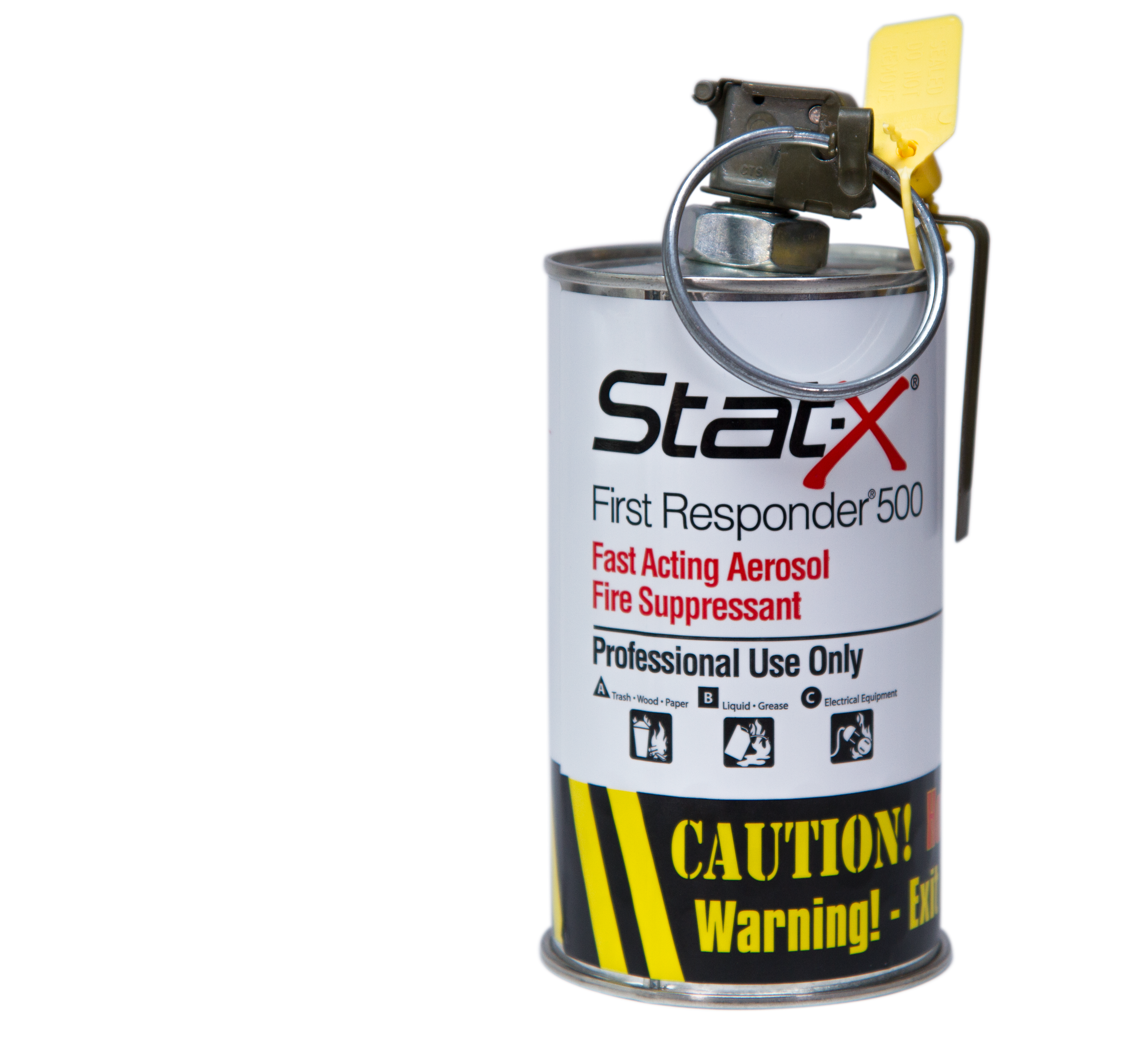
| 30 September 2026 | All new orders for NFS-320 and NFS2-640 panels require pre-approval by Notifier, to confirm alignment with project requirements and transition planning. Exceptions only for projects requiring marine-listed applications or STAT-X releasing applications |
| 15 November 2026 | Final date for acceptance of orders for NFS2-640 panels, with requested delivery no later than 20 December 2026. The NFS-320 continues to be available for pre-approved projects |
| 15 November 2027 | Final date for acceptance of orders for NFS-320C panels. Requested delivery dates must not extend beyond 20 December 2027 |
| After the last order date | Support for installed systems continues in accordance with the applicable product warranty. Beyond the warranty period, systems continue to be supported through the availability of replacement boards (NFS-320-RB and NFS-320-RBC-FR), subject to component availability from suppliers |
Extended lead times are expected on NFS2-640 panels as the transition progresses. All orders remain subject to Honeywell's standard terms and conditions of sale.
Impacted SKUs and recommended replacements
Published by Notifier as part of the phase-out notice.
NFS-320 panels
| Affected SKU | Recommended replacement |
|---|---|
| NFS-320, NFS-320-PO, NFS-320-SP | N16e |
| NFS-320C, NFS-320C-FR | N16e |
| NFS-320E, NFS-320E-PO, NFS-320E-SP | N16e |
| NFS-320R, NFS-320CR | N16e-r |
CPU boards and CLSS kits
| Affected SKU | Recommended replacement |
|---|---|
| CPU-320SYS, CPU-320SYS-C, CPU-320SYS-FR, CPU-320SYSE | CPU-N16LD (CAB5) / CPU-16-RTO (CAB4) |
| 320-CLSS-KIT-A, 320-CLSS-KIT-GW, 320-CLSS-KIT-V | N16e + CLSS gateway |
| 320R-CLSS-KIT-A, 320R-CLSS-KIT-V | N16e + CLSS gateway |
NFS2-640
| Affected SKU | Recommended replacement |
|---|---|
| CPU2-640, CPU2-640-FR, CPU2-640-PO, CPU2-640-SP | CPU-N16LD (CAB5) / CPU-16-RTO (CAB4) |
| CPU2-640E, CPU2-640E-PO, CPU2-640E-SP | CPU-N16LD (CAB5) / CPU-16-RTO (CAB4) |
| 640-CLSS-KIT-A, 640-CLSS-KIT-GW, 640-CLSS-KIT-V | CPU-N16LD (CAB5) / CPU-16-RTO (CAB4) + CLSS gateway |
Your options
- Keep the panel and maintain it. Continue annual inspection and testing, and hold critical spares. Appropriate where the system is young, compliant and the building has no near-term renovation planned. Replacement CPU boards remain available beyond the warranty period, subject to component availability.
- Keep the panel and add connectivity. ONYX Series panels connect to the Honeywell CLSS platform through the CLSS Gateway (CGW-MB, or HON-CGW-MBB pre-installed in a cabinet), adding remote visibility and reporting without replacing the panel.
- Order now while you still can. If an expansion or a spare panel is planned, an order placed before 30 September 2026 avoids the pre-approval step, and the panel can be ordered at all only until 15 November 2027.
- Plan a phased migration to INSPIRE. The N16e is the named replacement for the NFS-320 and the N16e-r for red-enclosure models.
Not sure where your panel sits in its lifecycle? We will review the panel, firmware revision, loop loading and device generation, and give you a written migration option with costs, timed against the November 2027 last order date.
NFS-320 service and inspection in Canada
- Annual inspection and testing to NFPA 72 and CAN/ULC-S536
- Detector sensitivity testing — the panel performs automatic sensitivity testing, and drift-compensation data identifies dirty detectors before they cause trouble conditions
- Troubleshooting of trouble, ground fault and maintenance-alert conditions
- Battery replacement and standby capacity verification (two 12 V, 18–200 AH)
- Loop expansion, device addition and reprogramming — including mixing current 951A devices onto loops built with 751- and 851-series devices
- Releasing-circuit service where the panel drives suppression discharge
- 24-hour emergency response
Using the NFS-320 as a releasing panel
The NFS-320 supports ten independent hazards with sophisticated cross-zone logic (three options), adjustable delay and discharge timers, four abort options, and is listed for low-pressure CO₂. This makes it usable as the release control for clean agent and CO₂ suppression systems as well as a building fire alarm panel. Releasing control on the loop is handled by the FCM-1-RELA module.
Links out to the Kidde Aegis 2.0 release panel and the Fenwal Detect-A-Fire heat detector page.
Listings and standards
| Item | Detail |
|---|---|
| ULC | Listed, file S635 |
| FM | Approved |
| CSFM | 7165-0028:0243 |
| Fire Dept. of New York | COA #6212 |
| Installation standard | ULC-S527-11, Standard for the Installation of Fire Alarm Systems |
| System standards | LOCAL (automatic, manual, waterflow and sprinkler supervisory); AUXILIARY (automatic, manual and waterflow — requires TM-4); REMOTE STATION (requires TM-4); PROPRIETARY (not applicable for FM); CENTRAL STATION (requires DACT); EMERGENCY VOICE/ALARM |
| Codes | Complies with NFPA 72, the International Building Code and the California Building Code fire alarm system requirements |
| Seismic | IBC 2012, 2009, 2006, 2003, 2000 and CBC 2007, with the SEISKIT-320/B26 mounting kit |
| Marine | US Coast Guard 161.002/50/0 and 161.002/55/0 (Standard 46 CFR 161.002); Lloyd's Register 11/600013 (ENV 3 category); American Bureau of Shipping. Marine systems must be configured with CAB-BM components per installation document PN 54756 |
Listings apply to the basic NFS-320C control panel; individual modules may be listed differently or have listings in process. For Canadian installations specify the NFS-320C and refer to Canadian applications manual addendum 52747.
Frequently asked questions
Thirteen questions with direct answers of two to four sentences each. This format is what search engines and AI assistants lift into a ready answer.
How many devices does the NFS-320 support?
The NFS-320 has one isolated intelligent Digital Communications Loop supporting up to 159 detectors and 159 modules, for a maximum of 318 addressable devices. FlashScan polls all 318 devices in under two seconds and can activate up to 159 outputs in under five seconds.
Is the NFS-320 discontinued? When is the last order date?
Notifier has confirmed the phase-out. The final date for acceptance of orders for NFS-320C panels is 15 November 2027, with requested delivery no later than 20 December 2027. From 30 September 2026, every new order must be pre-approved by Notifier, with exceptions only for marine-listed applications and STAT-X releasing applications.
Can I still get parts and service for my NFS-320?
Yes. Control Fire Systems is an authorized Notifier Engineered Systems Distributor and supplies FlashScan detectors, modules, bases, batteries and annunciators for NFS-320 systems, along with inspection, programming and emergency service. Support for installed systems continues under the applicable product warranty, and beyond it through replacement boards, subject to component availability. Parts availability will tighten as the phase-out progresses, so holding critical spares is worth planning.
What replaces the NFS-320?
The NOTIFIER INSPIRE N16 platform. The named replacement for the NFS-320 is the N16e, and the N16e-r where a red enclosure is required. Panels built around the CPU-320SYS boards are replaced by the CPU-N16LD (CAB5) or CPU-16-RTO (CAB4), and the 320 CLSS kits by an N16e with a CLSS gateway.
Can I still order an NFS-320 for a project I am designing now?
Until 15 November 2027, yes, but from 30 September 2026 the order must be pre-approved by Notifier. For any new design it is worth pricing the N16e alongside it, because the panel ordered in 2027 is a panel whose platform is already closed.
What is the difference between the NFS-320C, NFS-320C-FR and NFS-320CR?
Until 15 November 2027, yes, but from 30 September 2026 the order must be pre-approved by Notifier. For any new design it is worth pricing the N16e alongside it, because the panel ordered in 2027 is a panel whose platform is already closed.
Which detectors are compatible with the NFS-320?
Current-generation devices are the 951A family: FSP-951A photoelectric, FSP-951TA photo/thermal, FST-951 thermal, FST-951R rate-of-rise, FST-951H high-temperature, FSV-951 VIEW high-sensitivity, FPTI-951A and FCO-951A multi-criteria, FSCO-951A carbon monoxide, FS-OSI-RIA beam and the VESDA-E aspirating range. Older 851- and 751-series devices remain in service on installed loops.
My system uses 751- or 851-series detectors. What do I order now?
Both generations are superseded by the 951A family — FSP-851 by FSP-951A, FST-851 by FST-951, FST-851R by FST-951R, FSL-751 by the FSV-951 series, and the FSB-200 beam detector by the FS-OSI-RIA. Bases follow the same pattern: the B210LPA is replaced by the B300A-6 and B501BH sounder bases by the B200SRA. Send us the part number or a photo and we will confirm the current equivalent.
Can the NFS-320 control a suppression system?
Yes. It supports ten independent hazards with cross-zone logic, adjustable delay and discharge timers, four abort options, and is listed for low-pressure CO₂. Releasing control on the loop is handled by the FCM-1-RELA module.
How is the NFS-320 programmed?
Three ways: Autoprogram, which learns the connected devices in under a minute; front panel keypad editing with the KDM-R2, which works while the panel continues to provide fire protection; and VeriFire Tools, the programming utility used to build, test and download a complete program from a laptop and to upgrade panel firmware.
What batteries does the NFS-320 use and how long will it run on standby?
Two 12 V batteries between 18 and 200 AH. The on-board charger has a float rate of 27.6 V, and batteries larger than 26 AH require a separate battery cabinet — the NFS-LBB or the red NFS-LBBR.
Can an NFS-320 be monitored remotely?
Yes. The panel connects to the Honeywell CLSS platform through the CLSS Gateway (CGW-MB, or HON-CGW-MBB pre-installed in a cabinet) for remote monitoring and reporting, and the IPGSM-4GC provides IP and cellular communication paths for Canadian applications. Wireless devices can be added through the SWIFT gateway without running new loop wiring.
Is the NFS-320 approved for use in Canada?
Yes. The NFS-320C is ULC listed under file S635 and is the model specified for Canadian installations, to installation standard ULC-S527-11. Refer to Canadian applications manual addendum 52747.