













Fire Alarm Inspection, Testing & Installation in Toronto & the GTA
Control Fire Systems Ltd. inspects, tests, verifies and repairs commercial fire alarm systems across Toronto and the Greater Toronto Area. Annual inspection and testing is mandatory under the Ontario Fire Code and is carried out to CAN/ULC-S536 by CFAA-certified technicians. We issue the inspection report and the deficiency list you need for your fire safety records, and we respond to alarm troubles 24 hours a day.
Serving Ontario since 1975. Annual inspection and testing to CAN/ULC-S536 by CFAA-certified technicians. Inspection reports issued the next business day. 24/7 emergency response.
Book a fire alarm inspection: 1-866-525-8514
What the Ontario Fire Code Requires
Fire alarm systems in Ontario buildings must be inspected and tested at the intervals set out in the Ontario Fire Code, which adopts CAN/ULC-S536 as the governing standard for inspection and testing. Annual testing must be performed by a qualified technician, results must be recorded, and those records must be retained and made available to the authority having jurisdiction. In Toronto, that is Toronto Fire Services.
Responsibility sits with the building owner, not with the contractor. If a system has not been tested within the past twelve months, or if the records cannot be produced on request, the building is out of compliance regardless of whether the system works.
CAN/ULC-S536 - Annual Inspection and Testing
An S536 inspection covers every device on the system, not a sample. A full annual test includes:
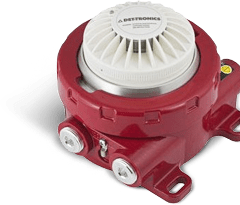
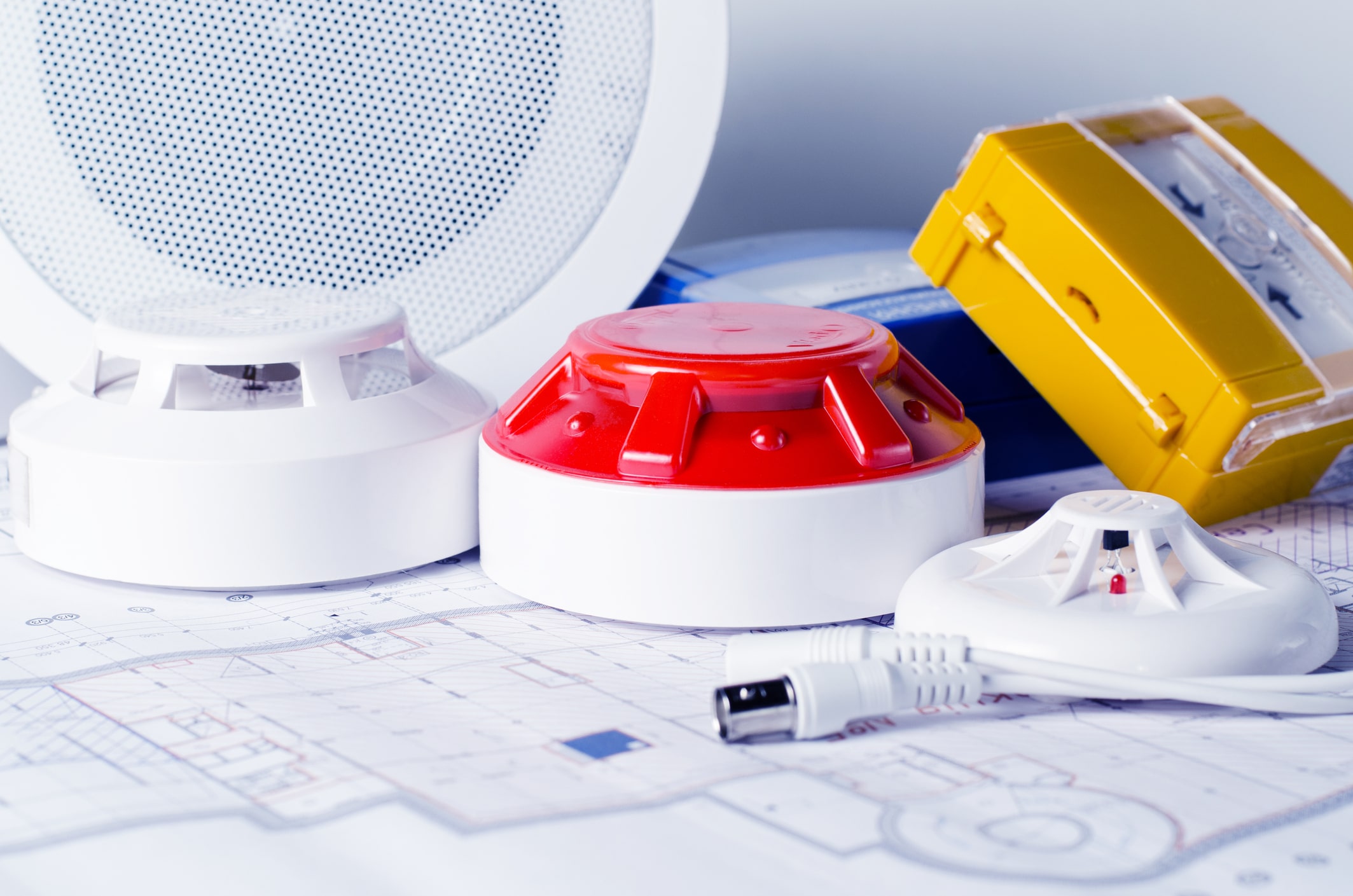
- Initiating devices - manual pull stations, smoke detectors, heat detectors and duct detectors
- Smoke detector sensitivity, measured against the manufacturer's stated range
- Notification appliances - bells, horns and visual strobes
- Annunciator panels and remote annunciators, including correct zone identification
- End-of-line devices and isolators, which in most cases require physical removal and reinstallation
- Primary and secondary power supplies, including battery capacity and expected remaining service life
- Emergency generator interface - run status, trouble indication, fuel level and low-fuel calibration
- Networked panel communication and the connection to your off-site monitoring provider
- Sprinkler interface signals - flow switch, tamper, low temperature, low air, valve supervisory and heat trace trouble
- In-suite signal silence functions, where fitted
Each item is recorded as a pass or a failure. Every failure is written up as a deficiency with the correction required and a price to complete it.
CAN/ULC-S537 Verification
Verification is a separate exercise from annual inspection and applies to work that changes the system. A new installation, an added or relocated device, a panel replacement, a firmware or programming change, or a wiring alteration all require verification under CAN/ULC-S537 before the system can be considered code-compliant. Verification produces its own report, which is a separate document from your annual inspection record.
We also perform third-party verification of installations completed by other contractors, which is often a condition of occupancy or of a landlord's fit-out agreement.
Who Is Permitted to Sign Off
Annual fire alarm inspection and testing must be performed by a qualified technician. Every fire alarm technician on our staff is certified by the Canadian Fire Alarm Association. Panel programming and service is carried out by technicians trained on the specific panel platform, not by general electricians. Work involving electrical connections is performed by licensed master electricians and accredited electrical contractors, and sprinkler interface work by fitters from Local 853.
Our Fire Alarm Services
Fire Alarm Inspection and Annual Testing
Full annual inspection and testing to CAN/ULC-S536, scheduled around your operating hours. We work from your existing as-built drawings and device schedule, or we build one if it does not exist. You receive a complete written record, a deficiency list, and a quote for any correction required. Multi-site portfolios can be scheduled on a single annual programme with staggered visit dates.
Fire Alarm Verification
Verification to CAN/ULC-S537 following new installation, expansion, panel replacement or system modification, including third-party verification of work completed by others. We identify what needs correcting before the authority having jurisdiction does.
Fire Alarm System Installation and Retrofit
Complete installation for new construction, and retrofit of end-of-life systems in occupied buildings. Retrofit work is phased so the building is never left without detection coverage, and we handle the transition from the old panel to the new one, device by device, with verification on completion. We work in restaurants, industrial plants, warehouses, high-rise residential and large commercial facilities.
Maintenance, Repairs and Deficiency Correction
Correction of deficiencies identified in inspection, whether we performed the inspection or not. This covers device replacement, panel faults, ground faults, wiring problems, battery replacement and nuisance alarm investigation. Where a deficiency cannot be corrected immediately, we document the impairment and the interim measures required so your compliance position stays defensible.
System Design and Engineering
Factory-trained engineers assess the building and produce a device layout and panel specification in AutoCAD, sized to the occupancy, hazard and construction type. This covers new-build design, retrofit specification, and review of a design prepared by someone else before you commit to it.
Panel Upgrades and Equipment Supply
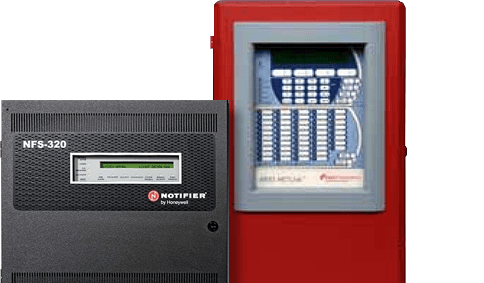
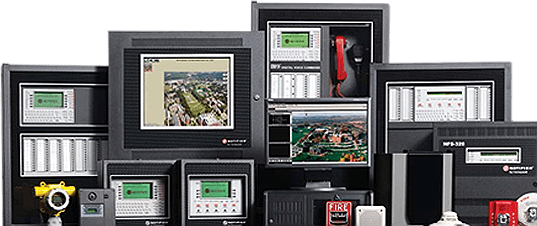
Supply and installation of fire alarm control panels, addressable and conventional, along with detectors, pull stations, strobes, horns, annunciators and power supplies. As an authorized Notifier Engineered Systems Distributor we supply Notifier equipment directly, and we also stock and service Fenwal, Kidde and Xtralis detection equipment. Where a panel has reached end of support, we will tell you plainly rather than continuing to repair it.
24-Hour Emergency Service
A panel in trouble means the system may not perform in a real fire, and it usually cannot wait for business hours. Our dispatch line is answered 24 hours a day and a technician is sent to assess, clear the condition, or establish a documented fire watch until the system is restored.
What You Receive After an Inspection
Every inspection produces a written report listing each device tested, the result, and any deficiency found, together with the corrective action required and a price to complete it. Reports are issued the next business day following the site visit and are formatted for your fire safety records and for review by the authority having jurisdiction.
Deficiencies that affect life safety are raised with you on site, before we leave the building. You are not told about a critical fault a week later in a PDF.
Your report includes:
- A device-by-device test record with pass or fail against each item
- A deficiency list ranked by severity, with the correction required for each
- A quotation to complete the corrections, valid for six months
- Confirmation of the next inspection due date
- The completed inspection certificate for your fire safety file
Fire Alarm Maintenance Schedule: What You Must Do Between Annual Inspections
Annual testing is our responsibility. The checks below are the building owner's, and they must be recorded. Accurate record-keeping is a legal requirement, not a best practice, and it is the first thing an inspector asks to see.
Daily
- Confirm the AC power lamp on the fire alarm panel is on and no fault or trouble lights are showing
- Confirm the panel is unobstructed and the enclosure has not been tampered with
- Check exit routes and stairwells are clear of obstruction and adequately lit
- Check fire doors close properly and none are propped open
- Confirm extinguishers and hose cabinets are unobstructed and in place
- Confirm sprinkler control valves are in their correct position and the fire pump controller shows ready
- Check detectors, pull stations, bells and strobes in corridors and public areas are clean, undamaged and unobstructed
- Check no combustible material, waste or flammable liquid has accumulated in or against the building
Monthly
- Test the system for normal operation and record the result
- Inspect the panel and batteries for corrosion, swelling or loose connections
- Inspect smoke alarms in line with the manufacturer's instructions
- Confirm the alarm interfaces correctly with the building's voice communication system
Annually - Performed by Us
The full CAN/ULC-S536 test described above. Annual testing cannot be delegated to building staff and cannot be signed off internally.
Systems and Buildings We Work With
We service fire alarm systems regardless of who installed them, including panels we did not supply. Conventional and addressable platforms, single-panel systems and networked multi-building installations.
Building types we work in regularly: high-rise residential and commercial towers, industrial plants and manufacturing facilities, warehouses and logistics operations, data centres and server rooms, hospitals and healthcare facilities, schools and educational buildings, government and municipal buildings, retail premises, restaurants and commercial kitchens, automotive facilities, power generation and renewable energy sites.
Service Area
Toronto, Etobicoke, Mississauga, Brampton, Vaughan, Markham, Scarborough, North York, Richmond Hill, Oakville and the wider Greater Toronto Area.
Our facility is at 63 Advance Rd, Toronto, ON M8Z 2S6.
Why Building Owners Use Control Fire Systems
- Operating in Ontario since 1975, inspecting and testing commercial fire alarm systems across Toronto and the GTA
- Every fire alarm technician certified by the Canadian Fire Alarm Association
- Authorized Notifier Engineered Systems Distributor, holding UL, ULC, FM and TC approvals
- Master electricians, accredited electrical contractors and Local 853 sprinkler fitters in-house, so interface work is not subcontracted
- Reports written to be handed straight to Toronto Fire Services without reformatting
- Both alarm and suppression under one contract, which removes the gap where two contractors each assume the other tested the interface
- 24-hour emergency response, answered by our own dispatch
Book a Fire Alarm Inspection
Send us the address, the panel make and the approximate device count, and we will come back with a quote and an inspection date. If you do not have the device count, we will establish it on site.
Call 1-866-525-8514 or email info@controlfiresystems.com.
Fire Alarm Inspection and Testing FAQs
Fire Alarm Systems Maintenance Schedule
Fire alarm systems require ongoing maintenance and inspections to make sure they're in good working order at all times. There are daily, monthly, and annual checks and maintenance you must perform, either through training an employee to handle it or using a professional fire alarm system maintenance company that can help you deal with problems as they arise. Accurate record-keeping is a legal requirement.
Daily Checks and Maintenance
- It's important to check that no fault or trouble lights are showing and ensure the fire alarm's AC power lamp is ON.
- Check there isn't a build-up of combustible material, trash, or flammable liquids in or near your building.
- Ensure all exit signs are properly displayed and that public corridors and stairwells are well-lit.
- Make sure all fire doors work properly and aren't propped in the OPEN position.
- All exit routes must be free from debris and obstacles.
- Fire hoses and extinguishers are unobstructed, well-maintained, and ready for deployment.
- If your building has sprinkler systems, ensure all water valves that control your sprinkler system are in their correct positions.
- Check that the fire pump controller's visual indicators show the unit is ready.
- Make sure the fire alarm control panel is free of obstructions and the locks haven't been tampered with.
- In corridors and public areas, check fire and smoke detectors, pull stations, annunciators, bells, horns, and emergency strobe lights are working, clean, undamaged, and unobstructed.
Monthly Checks and Maintenance
- Perform a fire alarm system test for normal operation.
- Carry out a thorough fire alarm system inspection for signs of damage or malfunction.
- Test and inspect smoke alarms according to the manufacturer's specifications.
- Ensure the fire alarm system works correctly with your facility's communication system.
Annual Checks and Maintenance
Annual fire alarm system inspections are mandated by the National Fire Code of Canada CAN/ULC-S536. A specially trained technician will perform a complete test of the fire alarm system to:
- Test that the annunciator panels work correctly with your facility's fire alarm system.
- Test initiating devices.
- Test smoke detector sensitivity.
- Test remote annunciators.
- Test end-of-line devices (resistors); involves physical dismount and reinstallation.
- Test Isolators (power buss, data buss, and in-room signal isolators); can involve physical dismount and reinstallation.
- Make sure power supplies and batteries are working properly and don't need replacement.
- Gen-sets in your emergency power supply loop have to be tested to make sure you can see run status and trouble indicators at the fire alarm control panel. Fuel levels and low fuel calibrations must align with your area's building code.
- Networked systems must be verified as properly working, as well as connections to off-site monitoring services.
- Sprinkler system connections must be checked (flow switch alarm, tamper alarm, low temperature, isolation valve supervisory signal, low air, heat trace controller trouble).
- In-suite signals with a silence option must be checked for proper operation
- Fire door releases work correctly and there are no improperly propped open fire doors.
Fire Alarm Systems Inspection Process
Control Fire Systems provides a full range of maintenance, inspection, and testing that meets annual regulatory mandates at local and national levels. We can provide your Toronto-based company with daily, monthly, and annual services that offer exceptional protection and extend the life of your fire protection system investment.
Control Fire Systems is your go-to fire alarm company in the Toronto area. We handle everything from fire alarm systems sales and fire alarm control panel installations to fire alarm testing and inspection for businesses throughout Toronto. Talk to our knowledgeable team members to find out what services your business needs most.