













Fire Safety for Industrial Facilities: Key Considerations
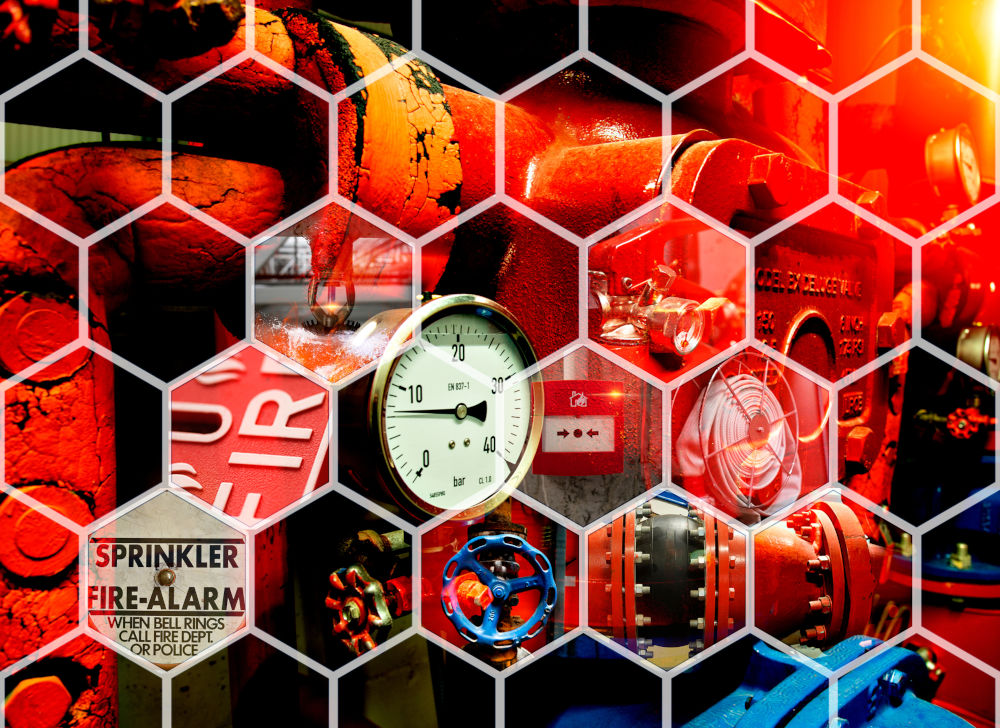
Industrial fire safety starts with recognizing that storage, production, electrical, and battery areas can present different hazards, so industrial fire protection must be selected for the specific risks present. Flammable liquids, combustible dust, ageing electrical equipment, battery storage, and high-value production lines may require different detection and suppression approaches, supported by a facility-specific hazard assessment.
This article is general guidance. Fire protection for an industrial facility requires a hazard assessment, an engineered design, and approval by the authority having jurisdiction.
Explore further
Key Takeaways
- A thorough hazard assessment is the first step to ensure that a facility is prepared for potential dangers.
- Protection systems ought not be generic; they need to be able to mitigate the unique risks posed by each potential hazard.
- Standards and frequencies must match the protection systems and hazards.
- Industrial risk detection depends on the environment.
- Facility managers can take action now; a practical walk-through can be done at any time.
Industrial fire protection systems must match the facility hazard
For industrial facilities , industrial fire protection systems should be selected and implemented based on the facility's particular processes and hazards. The following table lays out commonly encountered hazards and areas, followed by the protection approach that may help mitigate the indicated hazard, and finally the standards associated with the hazard and protection approach.
| Hazard or area | Typical protection approach | Standard or regulation to link |
|---|---|---|
| Flammable liquid storage or dispensing | Storage, handling, spill control, ventilation, and fire protection matched to the liquid and operation | Ontario Fire Code, Part 4 |
| Spray finishing and coating | Ventilation and interlocks; sprinkler or approved fixed protection as applicable | Ontario Fire Code, Section 5.12; NFPA 33 where referenced |
| Combustible dust processing | Housekeeping, dust collection, and controls matched to the dust hazard | Ontario Fire Code, Section 5.3 |
| High-bay / high storage | Sprinkler design matched to storage height, commodity, and arrangement | Ontario Fire Code, Section 3.2; NFPA 13 where required |
| Process ovens and dryers | Noncombustible construction, ventilation, interlocks, and other controls matched to the process hazard | Ontario Fire Code, Section 5.18; NFPA 86 where referenced |
A hazard assessment should come before product selection
An industrial fire risk assessment is a thorough walkthrough, ideally with an industrial risk professional, in which fire hazards, risks to on-site personnel, and any other dangers will be recognized and evaluated. Special emphasis will be put on understanding not only the physical structure of the facility and the hazards therein, but also the procedures and processes that facility personnel use. A quality assessment will note previously unrecognized hazards as seemingly benign as metal shavings, waste oil, solvent and other chemical storage, and waste-handling systems. Risk assessment will aid facility managers and operators in getting a good handle on what dangers are present in their facility, and it will lay a good foundation for moving forward to choosing appropriate detection and protection systems.
Flammable and combustible liquids require process-specific controls
Flammable and combustible liquids are regulated in Ontario by Part 4 of the Ontario Fire Code, which addresses storage, handling, use, processing, spill control, ventilation, and fire protection. The appropriate protection depends on the liquid classification, quantity, process, and storage arrangement. A hazard assessment should therefore start with the actual liquids and operations present rather than assuming that one suppression method is suitable for every liquid-fire hazard.
Combustible dust fire protection requires accumulation and collection controls
Combustible dust fire protection starts with controlling accumulations and suspended dust that can create fire or explosion hazards. Ontario Fire Code Section 5.3 applies where combustible dust is produced in hazardous quantities or concentrations and requires surfaces to be kept clean of accumulations using suitable methods. Dust-collecting systems must also be arranged to control accumulation and keep suspended dust at a safe concentration. These conditions should be evaluated as part of the facility's hazard assessment.
Electrical equipment spaces require hazard-specific detection and protection
Electrical rooms, switchgear, motor control centres, and other equipment spaces can present different detection and fire-protection considerations from open production areas. In Ontario, electrical installations associated with hazardous processes must conform to the Electrical Safety Code. Detection and suppression choices should be based on the equipment, room conditions, fire scenario, and applicable design requirements rather than assuming that a particular technology is required for every electrical room.
Battery hazards require application-specific assessment
Battery hazards vary substantially by application. The National Fire Code of Canada 2020 includes specific precautions for battery-charging installations serving battery-powered industrial trucks, including separation from combustible materials, ventilation in certain installations, control of ignition hazards, and portable extinguishers. Stationary battery energy storage fire suppression systems require a hazard-specific assessment. The accessible Ontario and national code sources reviewed for this article did not establish the draft's broader NFPA 855 claims, so those requirements should be confirmed for the specific BESS design before publication or project use.
Industrial fire safety detection must account for the environment
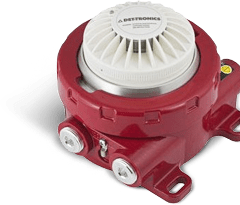
Spot smoke detectors can be unsuitable in some industrial environments because airborne contaminants such as dust, steam, humidity, fumes, and exhaust may cause nuisance alarms, while high ceilings or strong airflow can affect how smoke reaches a localized sensor. An industrial heat detector is a specialized fire alarm device that responds to high ambient temperature or a rapid increase in heat. Depending on the application, heat detection may be less susceptible than smoke detection to nuisance alarms from some airborne contaminants, but detector selection should be based on the specific hazard and environment.
People also search
Industrial fire alarm inspection frequency depends on the system and standard
Industrial fire alarm inspection frequency and other testing intervals depend on the system and the applicable code or standard. Fire suppression system installation, inspection, and testing should follow the applicable requirements for the installed system. The table below includes only frequencies or scheduling descriptions supported by the accessible primary regulatory sources reviewed for this update.
| System or item | Frequency / schedule | Standard or regulation to link |
|---|---|---|
| Comprehensive fire alarm system inspection and testing | Annually | Ontario Fire Code, Div. B, Subsection 6.3.2; CAN/ULC-S536 |
| Clean-agent cylinder requalification | Varies by cylinder specification and service | Transportation of Dangerous Goods Regulations, Part 5, and the applicable cylinder standard |
| Sprinkler system inspection and testing | Varies by component and test | Ontario Fire Code, Div. B, Section 6.5; NFPA 25 |
| Portable extinguisher inspection | Monthly | Ontario Fire Code, Div. B, Article 6.2.7.2; NFPA 10 for maintenance and testing |
| Fire safety plan review | At least every 12 months, and as necessary when conditions change | Ontario Fire Code, Div. B, Article 2.8.2.1(4) |
A monthly walk-through can identify visible fire-safety issues
- Take photos of your storage areas
- Check housekeeping in concealed and hard-to-access spaces
- Confirm the locations and types of your fire extinguishers
- Confirm the dates of your last inspections
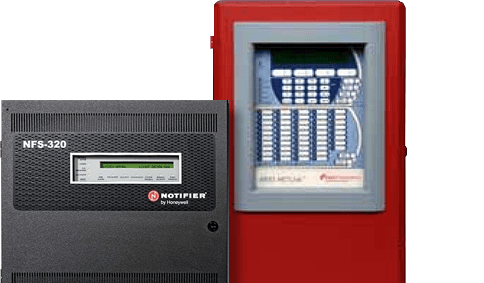
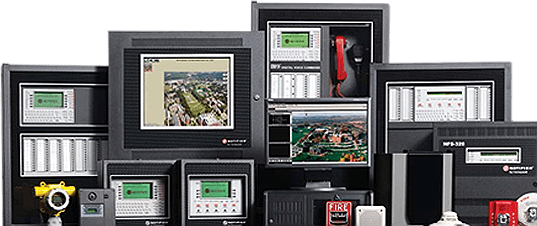
- Check the fire alarm panel and confirm that trouble or supervisory signals have been addressed
- Confirm that the fire safety plan is current and reflects changes in the building or its use
- Walk through regular processes and procedures with employees looking for potential risks
- Confirm contractor hot-work procedures before cutting, welding, grinding, or other spark-producing work begins
- Contact your local fire marshal's office with questions
- Consider requesting a walkthrough with a third-party fire and life safety protection systems company
Emergency training should follow the approved fire safety plan
Fire safety planning should address what people actually need to do during an emergency. Under the Ontario Fire Code, an applicable fire safety plan includes emergency procedures, responsibilities for supervisory staff, training and instruction, fire drills, control of fire hazards, and alternative measures during fire-protection-system shutdowns. Training should therefore cover the facility's system-specific response, notification responsibilities, evacuation procedures, and the actions assigned to supervisory staff in the approved fire safety plan.
Frequently asked questions
What fire protection is required in an industrial facility in Ontario?
Requirements depend on the building, occupancy, hazards, processes, and applicable provisions of the Ontario Fire Code and Building Code. Depending on the facility, required measures may include a fire safety plan, portable extinguishers, fire alarm or detection systems, sprinklers or other suppression systems, emergency procedures, and maintenance of fire-protection equipment. A hazard assessment and the authority having jurisdiction should be used to determine the requirements for a particular facility.
How often does an industrial fire alarm system need to be inspected?
In Ontario, industrial fire alarm inspection frequency includes an annual comprehensive inspection and test under the Ontario Fire Code, with Article 6.3.2.2 directing inspection and testing to conform to CAN/ULC-S536. Other checks may apply depending on the system and applicable requirements.
What type of fire detection works in dusty or high-bay industrial spaces?
Detection should be selected according to the conditions within the space rather than relying on one detector type for every industrial environment. Depending on the hazard, ceiling height, airflow, and airborne contaminants, options may include aspirating smoke detection, optical beam smoke detection, or heat detection. An engineered assessment can determine which detection method is appropriate for the particular application.
Do industrial facilities need a clean agent system or sprinklers?
The appropriate suppression system depends on the facility's hazards, occupancy, construction, processes, and applicable code requirements. Sprinkler systems may be required for some applications, while clean agent systems may be appropriate for spaces containing sensitive equipment or where water-based suppression presents particular concerns. A hazard assessment and engineered design should determine the appropriate protection for the facility.
What is a fire hazard assessment and who carries one out?
A fire hazard assessment is a structured review of a facility's fire hazards, processes, materials, occupants, and existing protection measures. It helps identify where controls, detection, suppression, procedures, or other safeguards may need to change. For system design or code compliance decisions, the assessment should involve appropriately qualified fire-protection professionals and the authority having jurisdiction as required.
Industrial fire safety improvements start with hazard-specific action
Reducing industrial fire risk starts with identifying hazards and matching them to appropriate detection, suppression, inspection, and training measures. A commercial fire protection provider can help assess existing systems and identify where engineered changes may be appropriate. For questions about a facility's fire protection needs, contact Control Fire Systems .