













Fire Protection for Liquid-Cooled Data Centres
Liquid cooling does not make a data hall fire-safe; it moves the hazards around. Fire protection for liquid-cooled data centres still has to address electrical faults, cabling, battery systems and plant equipment, and it now also has to account for coolant chemistry, leak paths, pumps and piping that did not exist in an air-cooled room.
The practical question for a Canadian facility is narrower than "is liquid cooling safe." It is this: which hazards changed when the cooling architecture changed, and does the existing detection, suppression and control logic still match them? This guide works through that question by cooling type, then covers the documentation an authority having jurisdiction (AHJ), an insurer and an operations team will expect.
Explore further
Key takeaways
- Characterize the coolant first. Its safety data sheet and any fire test data drive most of the decisions that follow.
- Assess the adjacent electrical hazards separately. Batteries, busways, PDUs and coolant plant rarely belong under one design.
- Match detection to the airflow you actually have , and keep coolant leak alarms distinct from fire alarms at every annunciation point.
- Review the control logic, not just the hardware. An inherited HVAC shutdown row can be exactly the wrong action in a liquid-cooled hall.
- Treat every added row of liquid-cooled racks as a change to the fire protection basis of design.
How liquid cooling changes data centre fire risk
Three architectures dominate, and they behave differently.
Direct-to-chip circulates a coolant, usually a water-glycol mixture, through cold plates mounted on processors. The fluid itself is generally not the fire hazard. The leak is. Conductive coolant escaping near energized equipment creates an electrical fault path, and the pumps, manifolds and coolant distribution units add mechanical plant to a space that previously held only IT gear.
Rear-door heat exchangers move heat at the rack boundary. The IT equipment stays air-cooled, so detection behaviour is closer to a conventional room, but the airflow pattern and the water connections both change.
Immersion cooling submerges servers in a dielectric fluid, either single-phase or two-phase. Here the fluid is a design input in its own right, because its fire properties vary by chemistry.
What does not change: the ignition sources. Power distribution, busways, connectors, cabling and battery systems remain the most common origins of fire in IT spaces, and a peer-reviewed review of data centre incidents published in the Journal of Loss Prevention in the Process Industries found battery failure to be the most frequent cause among the electrical-origin incidents it examined. Cooling technology does not remove any of that.
Identify hazards by cooling architecture
| Direct-to-chip | Single-phase immersion | Two-phase immersion | Hybrid air/liquid | |
|---|---|---|---|---|
| Primary fluid concern | Conductive leak onto live equipment | Fluid fire properties, volume held in tanks | Fluid properties plus vapour management | Both, by zone |
| Combustibility | Water-glycol: not a fuel | Depends entirely on the fluid | Depends entirely on the fluid | Mixed |
| Leak exposure | Manifolds, quick-disconnects, cold plates | Tank seals, lids, service operations | Tank seals, condenser circuit | All of the above |
| Added plant | CDUs, pumps, piping | Pumps, filtration, heat exchangers | Pumps, condensers | All of the above |
| Maintenance exposure | Hot-swap during operation | Lifting servers from fluid, drip and spill | As single-phase, plus vapour | Varies |
| Occupied space effects | Standard | Fluid handling, slip and spill | Fluid handling, vapour | Varies |
The row that causes the most trouble is combustibility. Vendor marketing frequently describes dielectric coolants as non-flammable, and that is not a safe generalization. Fluorinated fluids typically have no measurable flash point. Hydrocarbon-based immersion oils do have one, and manufacturer testing has shown that a hydrocarbon fluid with a flash point around 200 °C can continue burning once ignited. The Open Compute Project's immersion requirements specify minimum flash point, fire point and auto-ignition thresholds precisely because the range across products is wide.
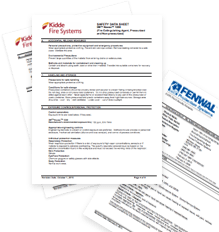
Treat the safety data sheet and any fire test data for the specific fluid as a required design input, not as a vendor formality.
People also search
Detection in liquid-cooled IT rooms
Liquid-cooled rooms tend to be smaller in air volume and higher in airflow than the halls they replace. Both work against spot smoke detection, which is designed for still or slowly moving air.
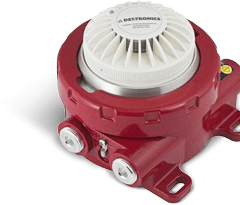
Aspirating smoke detection draws air through a sampling pipe network and can be tuned by zone, which is why it is the usual answer in high-airflow IT spaces. Sampling points at return air paths generally give the earliest warning, and UK Fire Industry Association guidance notes that pipe dilution counts toward the system's overall sensitivity class, so the design has to be calculated rather than assumed.
Two detection layers that are easy to overlook:
- Coolant leak detection. Loss-of-liquid and leak alarms are a separate monitored condition. They are not fire alarms, and they should not be programmed to look like one. A leak that strands a rack is an availability event; a leak that bridges a busbar is a fire precursor. The sequence of operations should tell the two apart.
- Equipment-level monitoring. Coolant temperature, flow, pressure and pump status often detect a developing fault well before smoke reaches a detector.
Choosing suppression and fire containment
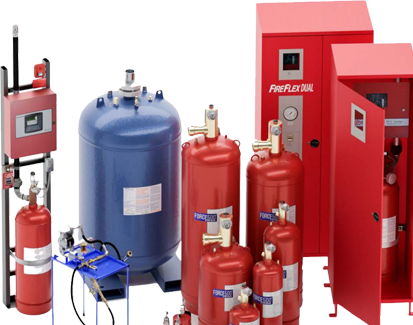
There is no universally correct suppression choice for a liquid-cooled room. The selection depends on what is actually burning, where the enclosure boundary sits, whether the space is normally occupied, and what the AHJ and the insurer will accept.
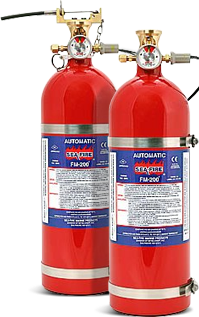
- Clean agent and inert gas systems suit enclosed IT spaces where the hazard is electrical and the goal is to stop a fire without wetting equipment. They depend on enclosure integrity and on correctly sized pressure relief venting. A room that has been rebuilt around tanks, pipework and new penetrations is not the room the original hold-time calculation was based on.
- Pre-action sprinkler systems remain relevant where the building, the code or the insurer calls for water-based protection, and they do not stop being relevant because the racks are liquid-cooled.
- Water mist is used in some facilities, usually where the hazard assessment and listed test evidence support it.
- Localized protection at the tank, cabinet or enclosure level can address a specific hazard that total flooding would address inefficiently.
Those trade-offs are the same ones that govern fire protection design for any data centre or server room . Liquid cooling changes the inputs, not the method.
Ask the supplier which listings or approvals cover the proposed arrangement for this hazard, in this enclosure. "Listed for Class A hazards" and "listed for a two-phase immersion tank" are very different statements.
Battery, power distribution and adjacent risks
The hazards next to the IT equipment usually deserve their own design, not a share of the room's.
UPS cabinets with lithium-ion cells, busways, PDUs, coolant pumps and plant rooms each carry distinct failure modes. Lithium-ion cells vent flammable gas before they ignite, which is why off-gas detection is used to buy warning time, and why a gaseous agent alone does not address thermal runaway: the agent does not remove the heat already stored in the cell.
NFPA 855 is the reference standard for stationary energy storage installations, and its applicability depends on chemistry, capacity and location. Whether a given UPS bank falls inside it is a question for the designer and the AHJ, not an assumption. NFPA 75's 2024 edition expanded its treatment of immersion-cooled IT equipment, including fire-property requirements for the immersion liquid; the applicable edition and its legal status are discussed below.
Fire alarm, cooling equipment and emergency controls
Cause-and-effect logic is where liquid cooling most often breaks an inherited design.
A conventional data hall sequence shuts down air handling on a confirmed alarm to stop smoke spread and protect agent concentration. Apply that reflexively to a liquid-cooled hall and you can stop the pumps that are keeping processors from overheating. Shutting down cooling during a non-fire event can make the situation worse, not better.
What a reviewed sequence should establish:
- Which inputs are confirmed, and by what (cross-zoned detection, a second device, an operator action)
- What happens to coolant pumps, CDUs and valves at each stage, stated explicitly rather than inherited from the HVAC row
- Which power disconnects operate, when, and to what
- How a coolant leak alarm is handled, and how it differs from a fire alarm
- What is tested at commissioning, and how actuation is proven without discharging agent
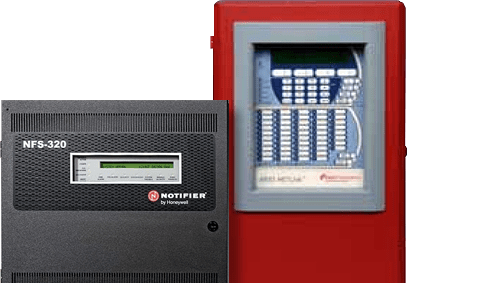
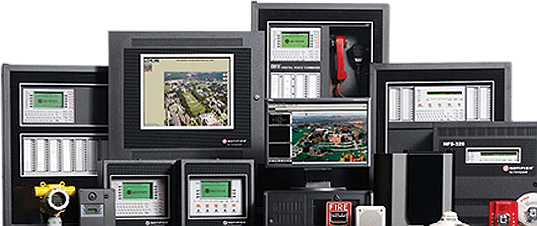
Integrated testing matters here because the interfaces cross trades. The connections between a releasing panel, HVAC shutdown and emergency power controls are where a change on one side quietly breaks the other.
Documentation for your AHJ, insurer and operations team
Canada does not apply NFPA standards automatically. The National Building Code and National Fire Code of Canada are model documents, and each province or territory decides whether and how to adopt them, sometimes with amendments and often on a different edition cycle. An NFPA standard carries legal weight where an adopted code references it, where a project specification calls it up, or where the AHJ or insurer requires it. Confirm which edition applies to your site before treating any clause as mandatory.
The package that keeps a project moving:
- Coolant safety data sheets and any fire test data for the specific fluid
- Cooling schematics: loops, CDUs, valves, piping routes and penetrations
- A written hazard assessment covering the IT enclosure, the plant and the battery rooms separately
- Detection and suppression drawings, with calculations
- A sequence of operations and cause-and-effect matrix
- Equipment listings and approvals relevant to this application
- Acceptance and integrated test results
- Maintenance plan and change-management procedure
Item 8 is the one that fails quietly. A hall that gains three more liquid-cooled rows over two years has changed its hazard, its enclosure leakage and possibly its agent quantity, without anyone opening the fire file.
Practical scenario: retrofitting an existing data hall
The following is illustrative, not a client project.
A facility converts four of twenty air-cooled rows to direct-to-chip cooling. The existing room has a clean agent system, spot smoke detection at ceiling level, and an HVAC shutdown on confirmed alarm.
A proportionate review would cover:
- Hazard review. New plant (CDUs, pumps, manifolds), new leak paths, changed combustible loading from piping and insulation.
- Detection zoning. Whether ceiling spot detection still sees smoke given the revised airflow, and whether aspirating detection is warranted for the converted rows.
- Enclosure integrity. New floor and wall penetrations for coolant piping, and whether hold time and pressure relief venting still hold. A room integrity test answers the leakage question but not the structural one.
- Control logic. Whether the HVAC shutdown row should now act on coolant pumps, and under what conditions.
- Documentation. Updated drawings, revised matrix, re-verification of affected interfaces.
None of that requires replacing the suppression system. It requires checking whether the system still matches the room.
Frequently asked questions
Is dielectric immersion fluid flammable? It depends on the fluid. Fluorinated fluids generally have no flash point. Hydrocarbon-based fluids do, and some will sustain burning once ignited. Use the specific product's safety data sheet and fire test data rather than a category assumption.
Does liquid cooling mean we no longer need a suppression system? No. Coolant surrounds or contacts the processors; it does not protect cabling, power distribution, batteries or plant. The ignition sources that cause most IT-space fires are unaffected.
Is a clean agent system always the right choice? No. Clean agent and inert gas systems suit enclosed electrical hazards with intact enclosure integrity. Where the building or insurer requires water-based protection, or where the hazard sits outside a tight enclosure, other options apply.
Do pre-action sprinklers still matter in a liquid-cooled hall? Often, yes. Where a code or insurer requires sprinkler protection, liquid cooling does not remove that requirement.
How are coolant leaks detected? Through leak detection cable or sensors at drip points, loss-of-liquid alarms, and flow, pressure and temperature monitoring on the cooling system. These should be distinguishable from fire alarm signals at the panel and at any remote monitoring point.
Are battery rooms covered by the same design? Usually not. Lithium-ion energy storage and UPS battery installations have their own hazards, detection needs and applicable standards, and are normally assessed separately.
Is NFPA 75 mandatory in Canada? Not by default. It applies where an adopted provincial code references it, where a specification requires it, or where the AHJ or insurer requires it. Confirm the edition and applicability for your jurisdiction.
What has to be documented when we expand the liquid-cooled footprint? Treat it as a change: updated hazard assessment, revised drawings and calculations, an updated sequence of operations, and re-verification of anything the change touched.
Where to go next
There is a quick test for an existing hall. Ask for three documents: the safety data sheet for the coolant in use, the current cooling schematic including every penetration, and a sequence of operations that names the pumps. If any of the three cannot be produced, the fire protection file has stopped describing the room, and that gap is worth closing before the next conversion.
Need help evaluating fire protection for your facility? Contact Control Fire Systems Ltd. to review special hazard risks, suppression and detection design, system integration, testing, and maintenance requirements, including fire protection engineering and design review for new builds and cooling retrofits alike.