












Fire Alarm, Trouble, and Supervisory Signals: What Facility Teams Need to Know
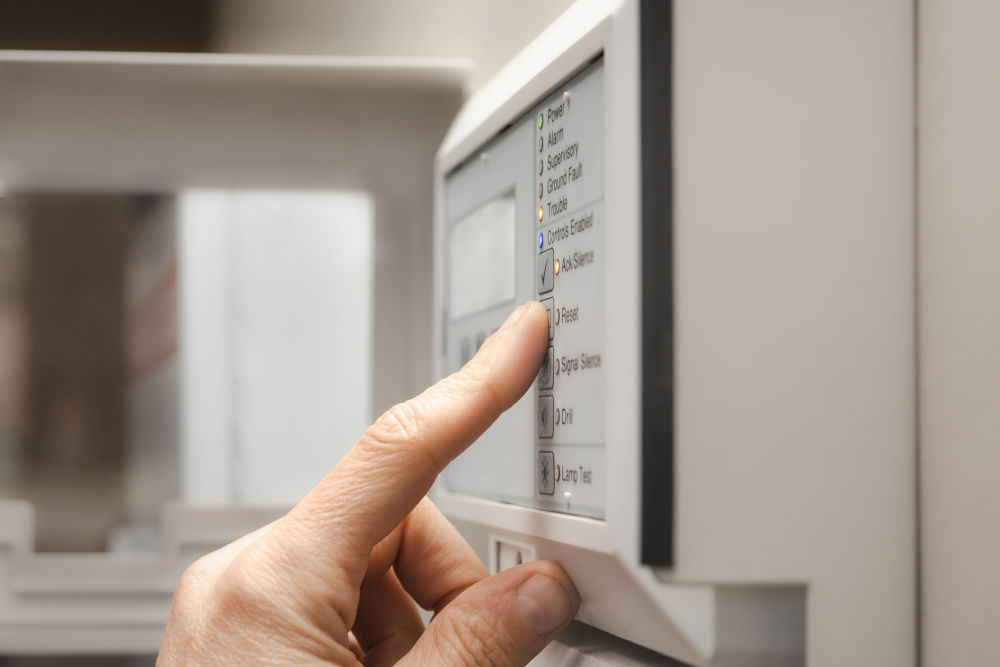
Three different signals can light up a fire alarm panel, and they ask for three different responses. A fire alarm signal means a device has detected a condition that calls for emergency response. A trouble signal means the fire alarm system itself has a fault and may not do its job. A supervisory signal means a piece of monitored fire protection equipment is off-normal, even though the alarm system is working perfectly.
Confusing the three costs time in the first minutes, and it produces incident reports that a service technician cannot act on. What follows is the practical distinction, what each signal usually comes from, and what to do first.
Explore further
Key takeaways
- Classify before you act. Alarm, trouble and supervisory each call for a different first move.
- Follow the building's own fire safety and impairment procedures. Panel programming is site-specific, and generic advice can be wrong for your system.
- Record the point, location, time and actions as they happen, not afterwards from memory.
- Never silence or reset to clear a condition that has not been fixed. That hides an impairment rather than resolving it.
- Verify that the panel, annunciator, BAS and monitoring station describe the same event the same way.
Three signals that mean different things
| Fire alarm | Trouble | Supervisory | |
|---|---|---|---|
| What it tells you | A device has initiated an alarm condition | The system has a fault or is impaired | Monitored fire protection equipment is off-normal |
| Is the alarm system working? | Yes | Possibly not | Yes |
| Typical urgency | Emergency response | Timely qualified attention | Prompt investigation |
| Who acts first | Occupants and emergency responders, per the fire safety plan | Facility team, then the service provider | Facility team, then whoever owns the equipment |
| Common cause | Smoke or heat detection, manual station, waterflow | Power, battery, wiring or communication fault | Closed valve, off-normal pressure or level |
One caution before the detail: how a given panel labels and prioritizes these states is set by its approved programming and its listing. Two buildings with the same equipment can annunciate differently. Treat the table as the concept and your own site's signal list as the authority.
What an alarm signal means
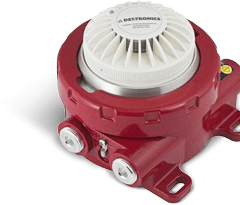
An alarm signal is generated by an initiating device acting as designed. Typical sources include smoke and heat detectors, manual pull stations, sprinkler waterflow switches, and, where configured, a suppression system release.
What follows the alarm depends entirely on design. Notification appliances, elevator recall, door release, fan shutdown, and transmission to a monitoring station may or may not be part of the response, and the particular combination is documented in the building's approved sequence. Follow the building's fire safety plan and the site emergency procedure, not a general rule read online.
What a trouble signal means
A trouble signal says something is wrong with the fire alarm system. Common causes include:
- Loss of AC power to the panel
- Low, failed or disconnected standby batteries
- An open circuit on an initiating or notification circuit
- A ground fault
- Loss of communication with a monitoring station or between panels
- A device removed, failed or taken out of service
A trouble does not mean there is a fire. It does mean part of the system may not perform, which is why "we'll look at it next week" is the wrong answer. Depending on what has failed and for how long, the condition may need to be managed as an impairment, with the notifications and interim measures your site procedure and authority having jurisdiction require. That can include a fire watch.
Silencing a trouble buzzer does not clear the fault. On most panels the trouble remains active and will resound. Resetting to make an indication disappear, when the underlying condition has not been corrected, hides an impairment rather than resolving it.
What a supervisory signal means
A supervisory signal reports that fire protection equipment being monitored has moved off its normal state. The alarm system is doing its job by telling you.
People also search
The usual example is a sprinkler control valve tamper switch: someone has partially or fully closed a valve that should be open. Depending on what the system monitors and how it is programmed, supervisory signals can also report conditions such as low air pressure on a dry or pre-action system, abnormal water level, or a fire pump or generator in an off-normal state.
Not every equipment fault is a supervisory signal, and not every supervisory signal is an emergency. What is and is not configured as supervisory on your site comes from the approved programming, so ask for the facility-specific list rather than assuming.
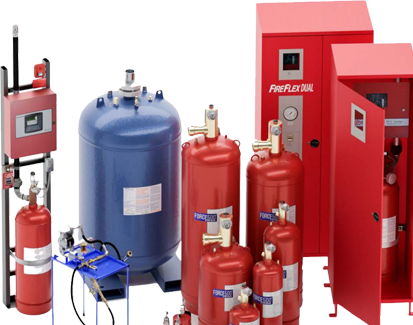
Examples in special hazard suppression systems
Releasing panels add signal types that general fire alarm guidance tends to skip.
- Pre-discharge indicates that the release sequence has started, usually after a confirmed detection condition, and that a time delay is running.
- Abort is typically a held, constant-pressure switch that holds the countdown while it is operated. It does not cancel the event, and on most listed arrangements it does not override manual release.
- Manual release initiates discharge from a station, commonly at an exit. Whether it bypasses the time delay depends on the panel, the listing and the design; some panels allow that delay to be configured.
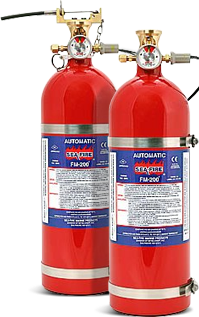
- Agent cylinder supervision reports low agent pressure, usually as a trouble or supervisory condition depending on the panel.
- Disconnect or actuator removal is normally supervised, so that a system taken out of service for maintenance announces itself rather than sitting silently impaired.
- Discharge confirmation reports that agent release has actually occurred, which is not the same signal as the panel commanding a release.
That last distinction matters during an incident. A releasing command and a confirmed discharge are different facts, and an operator reporting one as the other sends responders in with the wrong picture.
What facility staff should do first
A short response matrix that works for all three signal classes:
- Read the panel, not the bell. Note the point, device address, zone and location shown at the panel or annunciator, and the time.
- Classify the signal. Alarm, trouble or supervisory, as the panel reports it.
- Follow the site procedure. For an alarm, the fire safety plan governs. For trouble and supervisory conditions, follow your impairment procedure, including any notification and fire watch requirements.
- Do not silence or reset to clear an unresolved condition. Acknowledge and silence as your procedure allows; leave the condition visible until it is fixed.
- Call the right people. Trained responders for an alarm; your fire alarm or suppression service provider for a fault, with the panel information from step 1 in hand.
- Write it down. Time, signal class, point, location, actions taken, who was called, and when it was restored. This record is what makes the next inspection and any insurer or AHJ question straightforward.
Much of what arrives as an unplanned trouble call is exactly what scheduled fire alarm testing exists to find first.
Monitoring station, BAS and annunciator messages
The same event can read three different ways depending on where you are standing.
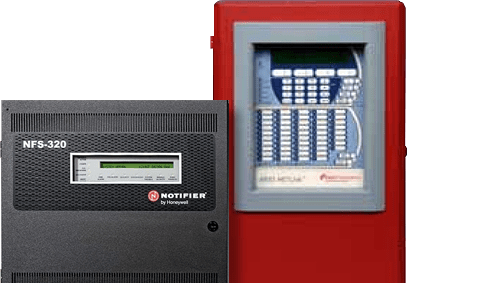
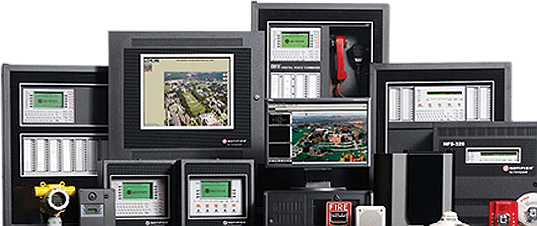
The fire alarm panel shows the condition in the language of its own programming. A remote annunciator may show an abbreviated version. A building automation system receiving a contact closure may show whatever text the BAS integrator typed in, which can be stale, generic, or simply wrong. A monitoring station sees whatever signal format the communicator sends, and its operator reads from its own account record.
None of these is automatically authoritative, and mismatched labels are one of the most common sources of confusion during a real event. Two things fix it: a facility-specific signal list that maps every monitored point to its panel text, its BAS text and its monitoring station description; and verification that the mapping is correct during integrated testing rather than during an incident. The fire alarm control panel is the reference point when the three disagree.
Canadian standards and inspection records
Canadian fire alarm work is governed by provincial and territorial codes, which reference the CAN/ULC standards rather than US documents by default:
- CAN/ULC-S524 covers the installation of fire alarm systems.
- CAN/ULC-S537 covers verification, confirming a system has been installed to its design and performs its intended functions.
- CAN/ULC-S536 covers periodic inspection and testing.
NFPA 72 is a United States code. It is not law in Canada on its own; it applies where a Canadian code, a project specification, an insurer or the authority having jurisdiction references it. Much of the material online about alarm, trouble and supervisory signals is written to US practice, and some of the terminology does not map cleanly onto Canadian standards. Where a US source and your panel documentation disagree, the governing documents for your jurisdiction and your panel's own listing win.
Referenced editions also change. Check which edition of each standard your province's fire code currently calls up, and keep inspection and test records for the period your jurisdiction requires. The same code path decides what the panel itself has to provide , from annunciation to standby power.
Frequently asked questions
Is a supervisory signal an alarm? No. It reports that monitored fire protection equipment is off-normal. The alarm system is functioning; something it watches is not in its normal state.
Can a trouble signal wait until morning? That is not a judgement to make from a general rule. It depends on what has failed, how much of the system is affected, and what your impairment procedure and authority having jurisdiction require. Some conditions trigger notification and interim protection obligations immediately.
Why does a sprinkler valve tamper show as supervisory rather than trouble? Because the fire alarm system is working correctly and is reporting a condition in a different system. A closed valve means sprinkler protection is impaired, which is exactly what a supervisory signal exists to announce.
Who is allowed to reset the panel? Someone trained on that panel, following your site procedure, and only once the condition has been investigated and addressed. Resetting to clear an indication is not a repair.
Why does our BAS show a different label than the panel? Because the BAS text was entered separately and may not have been maintained. Treat the fire alarm panel as the reference, and fix the mapping.
When does a condition become an impairment? When fire protection cannot perform its intended function. Your site procedure, your insurer and your AHJ set the notification, tagging and fire watch obligations; confirm them locally rather than assuming.
Does a pre-discharge signal mean agent has been released? No. Pre-discharge indicates the release sequence has started and a delay is running. Discharge confirmation is a separate signal.
What should we hand the service provider when we call? The panel point and address, the zone and physical location, the exact text shown, the time, the signal class, and what has already been done. That turns a vague call into a first-visit fix.
Where to go next
The single most useful document a facility team can hold is a signal list specific to the building: every monitored point, its class, its panel text, its BAS text and its monitoring station description, on one sheet at the panel. Most sites do not have one, and most sites find at least one mismatch the first time they build it.
Need help evaluating fire protection for your facility? Contact Control Fire Systems Ltd. to review special hazard risks, suppression and detection design, system integration, testing, and maintenance requirements, including fire alarm system inspection and testing across Ontario and beyond.