













NFPA 855 2026 Updates: What Canadian Facility Managers Should Know About Battery Energy Storage Fire Protection
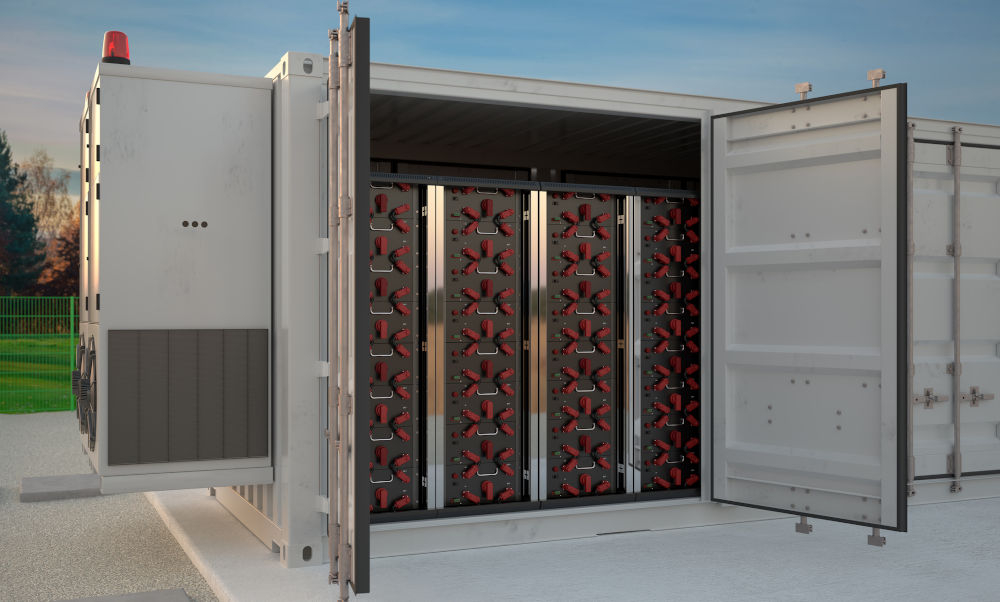
Battery energy storage systems are becoming more common in Canadian industrial, commercial, data center, and high-technology facilities. As these systems grow in size and complexity, fire protection planning must go beyond treating BESS rooms like standard electrical spaces.
The 2026 edition of NFPA 855 places stronger attention on large-scale fire testing, thermal runaway behaviour, hazardous gas management, explosion control, emergency response coordination, and documentation. For facility managers, this means BESS fire protection should be reviewed as a coordinated system — not as a collection of separate fire alarm, ventilation, suppression, and shutdown components.
Explore further
Canadian facilities also need to consider local AHJ expectations, insurance requirements, facility location, climate conditions, and operational risk. Understanding the NFPA 855 updates early can help reduce redesign delays, improve emergency planning, and support safer BESS installation or expansion projects.
Key Takeaways
- NFPA 855 remains one of the key standards for battery energy storage system fire protection and safety planning.
- The 2026 updates place stronger emphasis on large-scale fire testing, thermal runaway control, hazardous gas management, and explosion control.
- Canadian facility managers should not treat BESS rooms like ordinary electrical rooms because lithium-ion battery risks require specific hazard analysis and protection planning.
- Fire protection for BESS should coordinate detection, ventilation, suppression, shutdown procedures, signage, emergency access, and communication with local fire authorities.
- Documentation is critical for AHJ review, insurance underwriting, audits, and internal safety planning.
- Facility teams should keep layouts, schematics, inspection records, service records, ventilation data, gas detection information, and technical fire-test documentation accessible and up to date.
Why NFPA 855 Matters for Battery Energy Storage Fire Protection
What Changed in the 2026 Edition
NFPA 855 is a key regulatory provision covering battery storage and fire safety. Energy storage is an increasingly demanding and volatile part of businesses. As data centers and high-technology electronic room use increases, the NFPA has put out an update to 855 that helps to refine and strengthen the protections for your business.
Using NFPA as a guide to help walk you through your fire protection can keep your assets safe and put you on the right side of regulatory jurisdictions on both a local and nation-wide level.
Stronger Focus on Large-Scale Fire Testing
Thermal runaway is the big villain in large scale battery rooms, and empirical evidence and testing are key to understanding how to mitigate the extent of any nascent battery fire.
Battery fires can't be completely put out like normal combustibles, but the flame can be contained to avoid propagation through thermal runaway by addressing enclosure behavior and system separation.
More Attention to Explosion Control and Hazardous Gases
The NFPA 855 updates focus heavily on controlling off-gassing through ventilation. Without an ability to expel flammable gases from the cell, the battery is more prone to heating and "running" to adjacent cells which are not properly cordoned off.
Broader Emergency Response Expectations
Proper shutdown procedures are a vital part of your battery room fire plan. Simply having proper signage in place can be the difference between a minor problem and a major problem, as can the ease and coordination you have with your local fire jurisdiction. Shutting down your battery room is an immediately important step to stopping the proliferation of a battery fire.
People also search
Why Canadian Facility Managers Should Pay Attention
Canadian facilities may operate in wildly different locations, ranging from extreme cold to large-scale industrial facilities, but NFPA 855 can still be used as a practical guide regardless of the specific differences and unique needs of the building.
Likewise, local jurisdictional control may differ from region to region, but the precepts of the 855 updates will carry weight through all of them. This guide will impact the design and engineering processes when building or outfitting your battery storage rooms, as well as be valuable for maintaining a relationship with insurance companies.
As with all changes in policy, it is important to be diligent about understanding the new material for regulatory concerns; there is no excuse for being non-compliant with policy and suffering business downtime.
Fire Protection Questions to Ask Before Installing or Expanding BESS
You need to create a checklist of questions to answer before your battery storage is placed online, relating to both safety and jurisdictional accountability. Have you properly evaluated the BESS room for thermal runaway using the most up to date data? Do you have a proper gas detection and fire suppression system linked up and in place to deal with battery fires? Is everything else tied together to create a cohesive system-wide suppression strategy.
Using NFPA 855 and its updates as a guideline, you can work through these problems and find the proper solutions.
Documentation Facility Teams Should Keep
Documentation is still king in the new NFPA 855. Insurance underwriters and your local jurisdictional controls will look for specific information. Keeping a record of your schematics and layouts is vitally important, as are inspection and service records of all your equipment.
Technical documents like a UL 95040 will be one of the first things compliance officers reach for during an investigation or audit. Having all these one hand, along with other important information like ventilation data and gas detection, will make the entire process go smoother and easier.
Common Gaps That Create Approval or Insurance Friction
You can't treat BESS rooms like normal electrical rooms; this is the most obvious red flag auditors will find. Having outdated material that does not comply with the updated NFPA 855 standards will be enough friction moving forward, as will having poor communications between your facility, system, and local fire service.
Case Insight
A Canadian industrial facility was planning to add a lithium-ion BESS inside of an existing area. During review, the team discovered that the proposed layout did not clearly address fire-test assumptions, gas management, or emergency responder access mandated by NFPA 855. By revisiting the hazard mitigation analysis and coordinating fire alarm, ventilation, and suppression strategies early, the facility avoids redesign delays.
Final Recommendations & Best Practices
Review and analyze your system to ensure complete jurisdictional and safety compliance within BESS rooms. Treat your entire operation as a coordinated system rather than a series of disparate parts, and work with your team to document all the best practices you have put into place.
Planning or reviewing a battery energy storage installation in Canada?
Control Fire Systems ltd. helps facility teams evaluate BESS fire protection risks, coordinate detection and suppression requirements, and prepare documentation for AHJ, insurer, and internal safety review.
FAQs
1. What is NFPA 855?
NFPA 855 is a fire safety standard for the installation of stationary energy storage systems, including battery energy storage systems. It helps guide requirements around hazard analysis, system layout, fire protection, detection, ventilation, emergency response, and documentation.
2. Why do the NFPA 855 2026 updates matter for Canadian facilities?
The 2026 updates matter because they reflect growing fire protection concerns around large-scale battery energy storage, thermal runaway, hazardous gas release, explosion control, and emergency response planning. Canadian facilities may use NFPA 855 as a practical reference when coordinating with AHJs, insurers, engineers, and safety teams.
3. What fire risks are most important in BESS rooms?
The main risks include thermal runaway, fire propagation between battery cells or modules, hazardous off-gassing, flammable gas accumulation, explosion potential, ventilation failure, and limited emergency responder access. These risks require coordinated planning rather than a standard electrical-room approach.
4. What should facility managers ask before installing or expanding a BESS?
Facility managers should ask whether the room has been evaluated for thermal runaway risk, whether fire-test data supports the design, whether ventilation and gas detection are coordinated, whether suppression and alarm systems work together, and whether emergency shutdown and responder access have been planned.
5. What documentation should be kept for BESS fire protection?
Facilities should keep system layouts, schematics, hazard mitigation analysis records, inspection and service reports, ventilation data, gas detection information, emergency response procedures, AHJ correspondence, insurance-related documentation, and technical fire-test documents such as UL 9540A reports where applicable.